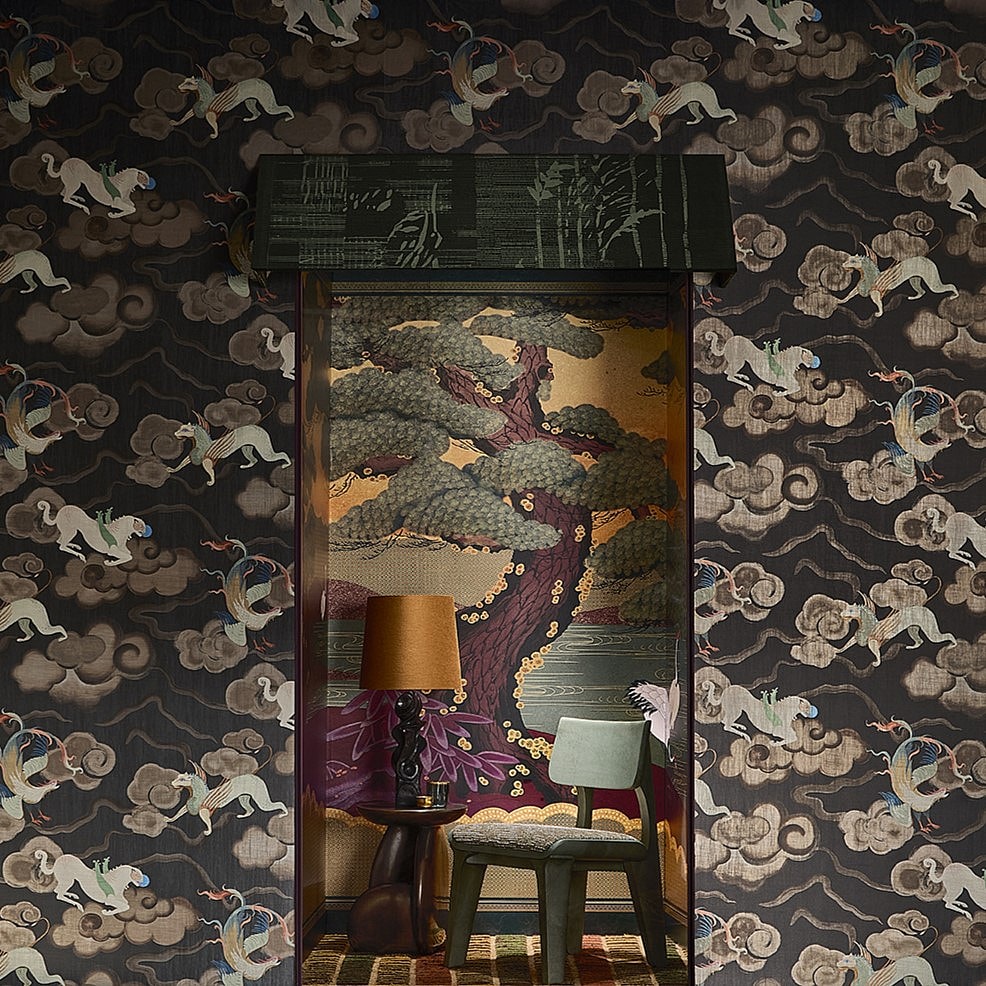
Andrew Martin’s Interior Design Review and its accompanying award have championed distinctive talent for 30 years. Now an international success story, the initiative looks homeward for its 30th winner, Ben Pentreath, while founder Martin Waller reflects on an archive of evolving taste and design achievement
Thirty years is a long time in interior design. How many micro-trends, colour schemes, innovative materials and technological advances have emerged since 1996? And how many of the interiors of those times have stood the test of time? One steadfast barometer of the last three decades is the Andrew Martin Interior Design Review, and its accompanying award.
Andrew Martin’s founder, Martin Waller, established the initiative to give a platform to design talent; a young Kelly Hoppen won the first award, and the book was accompanied by a series of installations of the designers’ work at the V&A. Thirty years later, its aims remain the same, albeit with a broader international outlook (the first awards stuck to UK-based designers; the 2026 iteration features talent from China, Japan, Canada and more).
“The fundamentals are still the same,” says Waller, discussing how the definition of ‘design excellence’ has changed. “It’s important to have a command of place, texture, colour, scale… But great designers also have something individual to say, and something that moves design forward.”

Hoppen’s entry in the first Interior Design Review (pictured) stands out for its simplicity – in a book full of elaborate swags and tails, her simple curtain treatments, clean colour schemes and Asian influences show the work of someone taking their own path. She was not new to the industry at the time, having been working since she was 16, but “winning gave me even more confidence,” she says. “I’d always followed my instincts, but having my work recognised in that way made me realise I didn’t need to seek anyone else’s approval. I could just be myself and design what I believed in.
“I’ve never believed in following trends. For me, design has always been about how a space makes you feel, not simply how it looks. I think Martin understood that there was a real philosophy behind my work, and that’s something I’ve stayed true to throughout my career.”

The book, which profiles the work of 100 designers, this year runs to a hefty 500-plus pages, and is available to pick up in Andrew Martin’s Design Centre showroom. It feels like a rarity in a digital age, but Waller says that “books are always permanent. Over the last 30 years, the Review has charted the road map of design, while also reflecting the political, financial and social shifts that have shaped the way we live.”
The shortlist and winner are chosen by a judging panel (this year it includes Stanley Tucci and Felicity Blunt; previous years have seen Ronnie Wood, Dominic West and Twiggy undertake the assignment). Waller deserves considerable credit for opening our eyes to the world of design outside of Europe and the US, particularly China (pictured is the work of Xi-an-based Yin Zhaowei, shortlisted for the 2026 Review). Stephen Falcke was the first designer from Africa to win (in 1999); One Plus Partnership were the first winners from Asia in 2012. Even with infinite inspiration at our fingertips online, the Review is the shortcut to seeing what excellence looks like around the world, in all its glossy, full-colour glory.
This year, the award comes home to the UK, with Ben Pentreath crowned the overall winner. Pentreath (whose work is pictured top) says that the awards’ international outlook might at first feel at odds with his practice, which he has always considered “trying to be rather specifically local”. However, “in an era when the whole concept of these questions of localism and globalism are top of the mind, it’s heartening to feel that to win this award doesn’t mean having to have a ubiquitous reach; that we can still cherish the individual, the handmade, the long-lasting, the real.”

Residential work by the California-based Harte Davis

The 30th edition of the Interior Design Review

Hotel Indigo Hainan Clear Water Bay, by Yang & Associates
The award, and inclusion in the book, can have career-changing benefits. Karen Howes, whose practice Taylor Howes won in 2005, says that “we’d been quietly working away in the industry, doing a lot for developers, but not necessarily for high-end private clients. [After the award] people took us a lot more seriously, and we won a lot of prestigious projects off the back of it. It really did change things.”
Howes says she makes a trip to the Design Centre every year to pick up the latest book, “and it’s like Christmas come early. It’s one of the things I really look forward to.” She says of Waller: “He’s always been a maverick, and he likes to do things differently. You can’t second-guess him; none of us ever has any idea who’s going to be the winner.”

Speaking on the main stage at Focus/26 on Design, Waller recently railed against the tyranny of good taste, and says that “I do think that it’s easy to drift into a vanilla world.” The Review aims to present a more balanced perspective: “I don’t know how it’s possible to have a universal idea of good taste – we are all products of our background, upbringing and geography.”
It’s extraordinary to reflect on the changes in the design industry in the last 30 years, not least in the UK. In the first Interior Design Review, the foreword noted that “just as there are about 20 renowned British fashion designers, there are a similar number of first-class interior designers working in this country.” Today, there are around 20,000 interior designers working in the UK, the domestic market is worth £1.8bn and Design Centre, Chelsea Harbour acts as a hub for a thriving industry.
Waller says that his motivations haven’t changed: “I have always been motivated by people – everyone has an extraordinary life story.” Nor is he surprised that the awards are still an important feature of the industry: “They were always built on strong foundations – simplicity, the accompanying Review book and their global reach. What amazes me is that I’m still going!”
Buy your copy of the Andrew Martin Interior Design Review (teNeues) from the showroom at Design Centre, Chelsea Harbour.

Interviews, Showroom News
20 Years of Romo at the Design Centre
One of the Design Centre's longest-standing showrooms celebrates two decades of change and growth at Chelsea Harbour.

Events
Focus/26 on Design – in Pictures
Look back on Focus/26 on Design with this visual diary of five action-packed days.
Personal Shopping Picks, Latest Products
Perfectly Imperfect
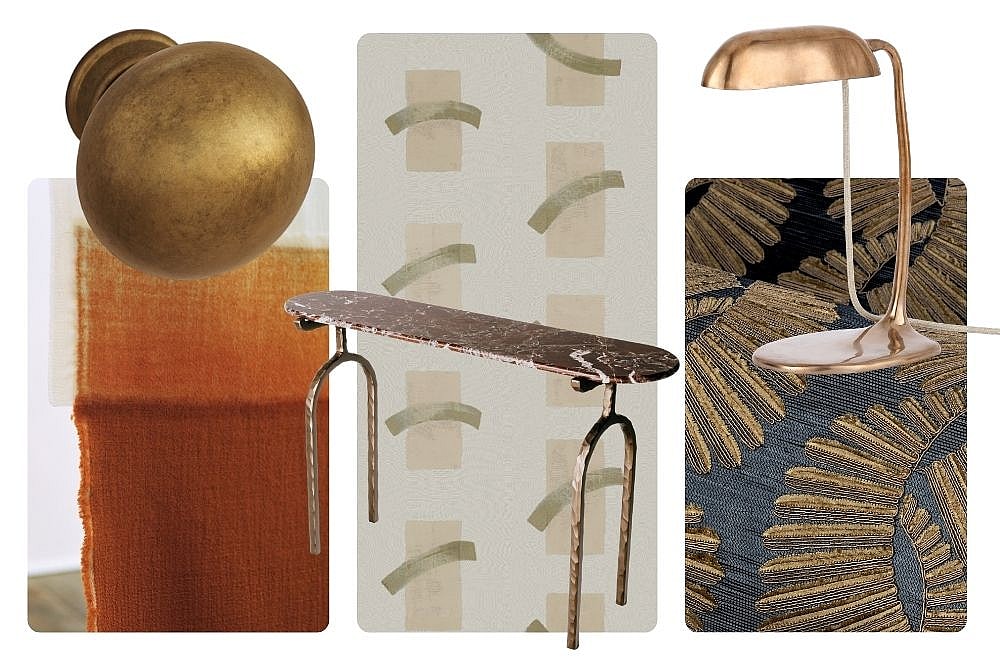
Patinated finishes, hand-made brushstrokes and interesting silhouettes add wabi-sabi beautiful imperfection to your design schemes.
Explore all Design News